Escalator Safety Mechanisms
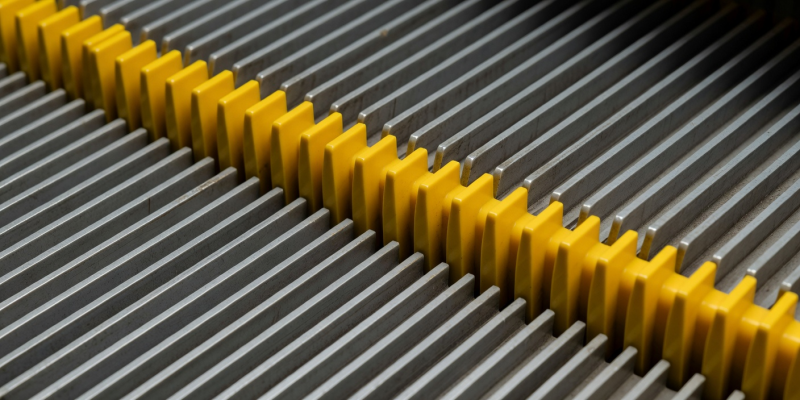
Because escalators operate continuously and interface directly with passengers traversing moving, heavy machinery, safety is the paramount concern in their design. Modern escalator systems are equipped with dozens of integrated safety mechanisms that monitor operations in real-time, shutting the system down instantly at the first sign of mechanical anomaly or passenger entrapment.
Understanding these mechanisms is crucial for facilities managers to ensure that routine maintenance schedules properly test these fault sensors. Below is an overview of the critical safety features standard on contemporary escalators.
Comb Plate Impact Switches
At the top and bottom of every escalator lies the comb plate, a stationary plate with teeth that mesh perfectly with the cleats of the moving steps. Its primary purpose is to scoop passengers' footwear safely off the step as it disappears into the mechanism.
Should debris, a shoelace, or an item of clothing become wedged between the step and the comb plate, the mechanical resistance increases. Comb plate impact switches detect horizontal or vertical movement of the comb plate caused by this wedging. If displaced by even a few millimeters, the switch immediately severs power to the drive motor and applies the brakes, minimizing the risk of severe entrapment.
Skirt Deflector Brushes
The "skirt" is the static panel running alongside the moving steps. Historically, the gap between the moving step and the stationary skirt presented a significant pinch risk for soft footwear or loose clothing.
To mitigate this, stiff bristle brushes are installed continuously along the length of the skirt just above step level. These act as a tactile warning. When a passenger's foot brushes against the bristles, their instinctive reaction is to step away from the edge. Additionally, skirt safety switches are embedded behind the paneling; if outward pressure is applied to the skirt—indicating something is wedged in the gap—the escalator halts.
Handrail Speed Monitoring
The rubber handrails are driven by a separate pulley system linked to the main drive. It is critical that the handrail moves at exactly the same speed as the steps (typically within a tolerance of ±2%). If a handrail stalls or moves too slowly, a passenger holding onto it may be pulled backward, leading to a fall.
Handrail speed sensors continuously monitor the velocity of the handrail relative to the step band. If a discrepancy exceeding the safe tolerance is detected for more than a few seconds, the machine initiates an automatic shutdown sequence.
Missing Step Detectors
Though exceedingly rare in well-maintained machines, the structural failure or derailment of an individual step poses a catastrophic hazard. Missing step detectors (often optical or mechanical switches) are located beneath the passenger area, usually near the return loop at the bottom or top truss.
These sensors verify the presence of every step before it emerges onto the passenger track. If a gap is detected in the continuous loop, the system emergency brakes engage immediately to prevent the void from reaching the passenger riding surface.
Emergency Stop Buttons
The most visible safety mechanism is the Emergency Stop (E-Stop) button, conspicuously located at both the top and bottom landings, and occasionally at intermediate points on exceptionally long units. These are manual overrides designed to be pressed by passengers or bystanders observing an emergency.
Pressing an E-Stop button disconnects power and drops the machine brake. The deceleration rate is carefully calibrated; the escalator must stop quickly enough to prevent further injury, but gradually enough so as not to throw standing passengers forward due to inertia.
Drive Chain and Step Chain Sensors
The enormous mechanical load of an escalator is managed by heavy-duty drive chains connecting the motor to the main drive shaft, and step chains pulling the step bands. Should either chain stretch beyond operational tolerances or break entirely, the results could be disastrous.
Broken chain switches monitor tension and alignment. If tension is lost, physical switches are tripped, stopping the motor and engaging emergency pawl brakes that lock directly into the drive mechanism to prevent freewheeling or rapid descent under gravity.
Through the integration of these redundant sensor arrays, modern vertical transportation engineering has transformed moving staircases into remarkably safe modes of transit, provided that facility operators adhere rigidly to required testing and maintenance protocols.